Showing posts with label books. Show all posts

Old Books on Camping & Tents from Google Books

Google Books is a very interesting research resource, and a great one simply to explore through. I was browsing through it tonight and came across several interesting books which I have embedded below. They are all 'Full Preview' versions, so you can see every page of the books. Click on the 'More about this book' link at the bottom of each display window to see it in larger format. Enjoy!

Practical hints on camping By Howard Henderson - 1882


Hunting, Fishing and Camping By Leon Leonwood Bean - 1942


Camp life in the woods and the tricks of trapping and trap making By William Hamilton Gibson - 1882


Tents and tent-life from the earliest ages to the present time By Godfrey Rhodes - 1859


Cheers,

Mungo

Are you subscribed to the Mungo Says Bah! RSS feed yet? If not - you know what to do...

You can also follow my tweets at @MungoBah

Flint in the Post, Paleo Knife in the Box - My Flint & Steel is Complete!

Flint is a hard, sedimentary cryptocrystalline form of the mineral quartz, categorized as a variety of chert.

bushcraft
Recently I sent out an S.O.S. to the bushcraft world explaining that I was unable to replenish my supply of flint for my strike-a-light set.
bushcraft
Mark from Nehawka Primitive Skills responded and offered to send me some flint.
bushcraft
His blog profile states "I've been interested in primitive skills ever since I read Larry Dean Olsen's book, Outdoor Survival Skills, decades ago. The past 10 years, or so, I have been striving to learn the skills...flintkapping, hide working, friction fires, edible & medicinal plants, etc. Having gained some proficiency, I have been demonstrating and teaching at historical events and gatherings. It is a never ending journey."

bushcraft
I have Larry Dean Olsen's book and it is one of my most treasured skills and bushcraft books.

bushcraft
Every time I read it, I learn something new. I highly recommend it. Mark's site is brilliant. Check out one of his Flintknapping 101 series.
bushcraft
So just before this past weekend, a package arrived in the mail. And like I once wrote, ..."there's nothing quite like the feeling you get when a package arrives for you in the post box."

bushcraft
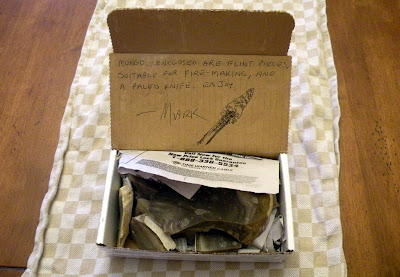
I very excitedly opened the package, and in it was a box.
bushcraft
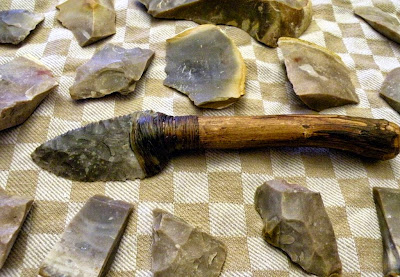
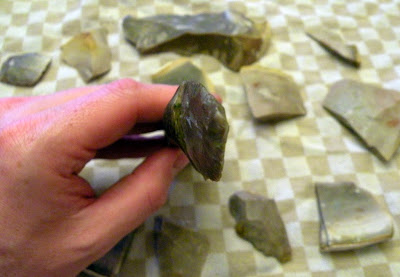
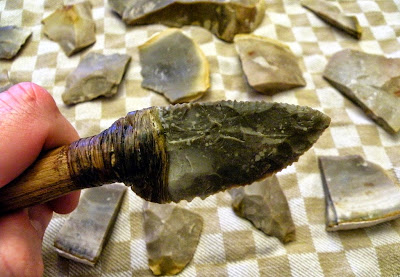
And in the box were about a million pieces of flint (well, a whole bunch anyhow...) and an item wrapped in newspaper.
bushcraft
At first I just stared at the flint, figuring I had just hit paydirt. Who needs gold when you have a box of flint? But as I pulled the chunk of rolled up newspaper out, I realized there was something inside.

bushcraft
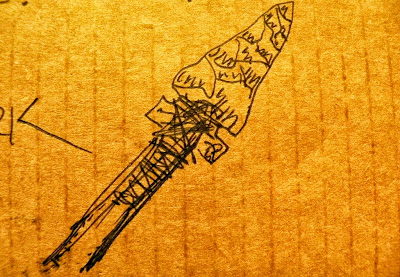
It was a paleo-knife. I'd not read Mark's note carefully on the inside flap of the box. It is amazing!
bushcraft
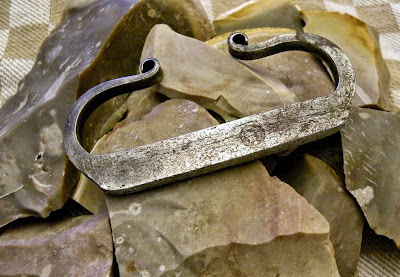
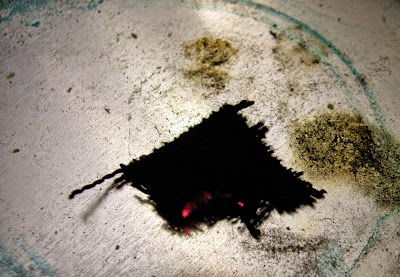
So, so far I have cut up some beef jerky withe paleo-knife. But the first thing I did was grab my steel striker, a small piece of charcloth and hit a spark off it with a new piece of flint.

bushcraft
It took 5 seconds and my charcloth turned into a hot ember.
bushcraft
I have much more to write about flint, and fire lighting with a strike-a-light in general - I intend to write about Keith's (Woodsrunner's) book Primitive Fire Lighting - Flint & Steel that I ordered some months ago and got in a package from Australia.

But first I need to thank Mark of Nehawka Primitive Skills for his thoughtful and wonderful gift. I am going to knapp a piece or two of the flint and see what I can make!

Cheers,

Mungo

Indian Fishing: Early Methods on the Northwest Coast


While browsing through Tim Smith's Jack Mountain Bushcraft Network, I came across a thread started by Samuel Chapman.


He picked up a copy of Indian Fishing: Early Methods on the Northwest Coast, by Hilary Stewart for a good price and was asking if anyone else had read it. Tim Smith highly recommends it.

Now, I'm not really an avid angler, but I am more interested in the bushcraft that is illustrated in this book. Look at the following images and see how lures and hooks were made without using iron or steel. The intracacy of the lures and hooks and the craftsmanship in creating cedar bark fishing line is astonishing to me.


The book jacket's summary reads:
"Of the many resources available to the First Nations of the Northwest Coast, the most vital was fish. The people devised ingenious ways of catching the different species of fish, creating a technology vastly different from that of today''s industrial world. With attention to clarity and detail, Hilary Stewart illustrates their hooks, lines, sinkers, lures, floats, clubs, spears, harpoons, nets, traps, rakes and gaffs, showing how these were made and used--in over 450 drawings and 75 photographs."


Check out this preview of Indian Fishing: Early Methods on the Northwest Coast on Google Book Search.

Cheers,

Mungo

Old Camping Resources - Free Online Books

Now that my brain has been fired up and I am interested in reading again, I came across some cool camping resources on archive.org.

The following books are from the late 1800s and early 1900s. There are some fascinating images (see below) capturing interesting ways to build out items or in one case, how to hook up your dog to shoulder some of the load(!).

How To Live In The Woods


Hints for Camping and Walking. How To Camp Out.


Canoeing and Camping


The Book of Camping


Camp-Lore and Woodcraft


Alone in the Wilderness


Hope you got something interesting out of these!

Cheers,

Mungo

Jack London - "To Build a Fire"


So for some reason or another I have never read any of Jack London's stories. When my friend Arjuna found this out, he expressed great astonishment and chided me for this oversight. So I read 'To Build a Fire' late last night, and was very impressed and have decided to read every single Jack London story I can get my hands on...

Here is a summary of 'To Build a Fire' (from Wikipedia)
"This story is about a man on the Yukon Trail on a very cold day (-75°F, -60°C). His only traveling companion is a husky wolf-dog. The story describes the hardships the man is going through at starting a fire and trying to keep himself warm. The cold does not faze the man, a newcomer to the Yukon, who plans to meet his friends (who are referred to as boys) by six o'clock at an old junction. He walks along a creek trail, mindful of the dangerous, hidden springs, because getting wet feet on such a cold day is dangerous. The man continues on and, in an apparently safe spot, falls through the snow and gets wet up to his shins. He remembers an old-timer who had warned him that no man should travel in the Klondike alone when the temperature was less than fifty degrees below zero.

After having this accident, the man becomes scared and immediately starts a fire to dry his wet clothes. He foolishly starts the fire underneath a spruce tree, which is covered with snow, and keeps pulling twigs from it to feed the flames. The agitation eventually upsets the loaded boughs, which dump their weight of snow onto the fire and extinguish it. He then tries to start a new fire, aware that he is already going to lose a few toes from frostbite. He gathers twigs and grasses, then tries to light a match with his frozen, numbed fingers. He grabs all his matches and lights them all at once, then sets fire to a piece of bark. He starts the fire, but accidentally pokes it apart while trying to remove a piece of green moss. The man decides to kill the dog and to put his hands inside its warm body to restore his circulation. But due to the extreme cold, he cannot kill the dog because he is unable to pull out his knife, or even throttle the animal. He lets it go.

In a desperate attempt to keep himself warm, he starts to run, trying to let the exertion heat his body. However, he has no stamina, and soon he stops and sits down. He imagines his friends finding his dead body in the snow, then himself telling the old-timer that he was right: It was foolish to travel alone. A warmth covers him and he falls into a deep, deadly, relaxing sleep. The dog does not understand why the man is sitting in the snow and not making a fire to warm them. As night falls, the dog comes closer to him and smells death on the man. It trots away "in the direction of the camp it knew, where were the other food-providers and fire-providers."
And here it is:
To Build a Fire

"DAY HAD BROKEN cold and gray, exceedingly cold and gray, when the man turned aside from the main Yukon trail and climbed the high earth-bank, where a dim and little-travelled trail led eastward through the fat spruce timberland. It was a steep bank, and he paused for breath at the top, excusing the act to himself by looking at his watch. It was nine o'clock. There was no sun nor hint of sun, though there was not a cloud in the sky. It was a clear day, and yet there seemed an intangible pall over the face of things, a subtle gloom that made the day dark, and that was due to the absence of sun. This fact did not worry the man. He was used to the lack of sun. It had been days since he had seen the sun, and he knew that a few more days must pass before that cheerful orb, due south, would just peep above the sky-line and dip immediately from view.

The Yukon lay a mile wide and hidden under three feet of ice.

The man flung a look back along the way he had come. The Yukon lay a mile wide and hidden under three feet of ice. On top of this ice were as many feet of snow. It was all pure white, rolling in gentle undulations where the ice-jams of the freeze-up had formed. North and south, as far as his eye could see, it was unbroken white, save for a dark hair-line that curved and twisted from around the spruce-covered island to the south, and that curved and twisted away into the north, where it disappeared behind another spruce-covered island. This dark hair-line was the trail—the main trail—that led south five hundred miles to the Chilcoot Pass, Dyea, and salt water; and that led north seventy miles to Dawson, and still on to the north a thousand miles to Nulato, and finally to St. Michael on Bering Sea, a thousand miles and half a thousand more.

But all this—the mysterious, far-reaching hair-line trail, the absence of sun from the sky, the tremendous cold, and the strangeness and weirdness of it all—made no impression on the man. It was not because he was long used to it. He was a newcomer in the land, a chechaquo, and this was his first winter. The trouble with him was that he was without imagination. He was quick and alert in the things of life, but only in the things, and not in the significances. Fifty degrees below zero meant eighty-odd degrees of frost. Such fact impressed him as being cold and uncomfortable, and that was all. It did not lead him to meditate upon his frailty as a creature of temperature, and upon man's frailty in general, able only to live within certain narrow limits of heat and cold; and from there on it did not lead him to the conjectural field of immortality and man's place in the universe. Fifty degrees below zero stood for a bite of frost that hurt and that must be guarded against by the use of mittens, ear-flaps, warm moccasins, and thick socks. Fifty degrees below zero was to him just precisely fifty degrees below zero. That there should be anything more to it than that was a thought that never entered his head.

As he turned to go on, he spat speculatively. There was a sharp, explosive crackle that startled him. He spat again. And again, in the air, before it could fall to the snow, the spittle crackled. He knew that at fifty below spittle crackled on the snow, but this spittle had crackled in the air. Undoubtedly it was colder than fifty below—how much colder he did not know. But the temperature did not matter. He was bound for the old claim on the left fork of Henderson Creek, where the boys were already. They had come over across the divide from the Indian Creek country, while he had come the roundabout way to take a look at the possibilities of getting out logs in the spring from the islands in the Yukon. He would be in to camp by six o'clock; a bit after dark, it was true, but the boys would be there, a fire would be going, and a hot supper would be ready. As for lunch, he pressed his hand against the protruding bundle under his jacket. It was also under his shirt, wrapped up in a handkerchief and lying against the naked skin. It was the only way to keep the biscuits from freezing. He smiled agreeably to himself as he thought of those biscuits, each cut open and sopped in bacon grease, and each enclosing a generous slice of fried bacon."
Read the rest of this in full and listen to it in audio format.

Also, have a free read of two other stories he wrote: The Call of the Wild and White Fang.

Who else has read this before? Let me know in your comments...

Cheers,

Mungo

Bushcraft, Outdoors, Camping, Wilderness Links - To Be Read In Front Of A Fire

This wonderful cold weather is keeping most of us inside. We don't have a fireplace, but if we did, I would curl up with a laptop in front of the fire and read.

If you have a fireplace and a laptop, here are a few reading suggestions that you might find interesting:

Mocotaugan: The Story and Art of the Crooked Knife.
This artifact, often called a “crooked knife,” is anthropologically important, intriguing, and often beautiful. Yet the significance and merit of the knife is little known today outside of a small circle of anthropologists, collectors, curators, and native American craftsmen. Mocotaugan traces the history of the knife from its Stone Age origin to the present; and examines in unprecedented depth the art of that essential artifact. The publication and distribution of Mocotaugan is a non-profit effort to make the exceptional nature of this knife better known to as wide and diverse an audience as reasonably possible. To that end, the entire printed book is available for downloading in PDF form on this web site, on the condition that all use of text and images be properly credited.
From BushcraftLiving.com, a downloadable PDF pamphlet by Anthony S. Emery on the traditional craft of net making.

Learn how to make baskets out of natural cordage and materials at Basket-Making.com. Useful for if you are beginning to feel a little neurotic from work, etc...

Now that minus 30 degree weather is upon us, here is a timely article - The Big Chill: A quick guide on hypothermia and how to treat it.

Stop reading for a little bit and watch Michel Blomgren's 'Survivor' videos - amazing stuff.

Ashley of Natural Bushcraft UK has a terrific review of 4 simple and fundamental stoves for the outdoors. Browse through his site... very nice.

Jon Ridgeon has some well-photographed bushcraft tutorials - well worth reading and looking through. This guy does some very high quality bushcrafting.

Back to videos again. Dave Cantebury of Wilderness Outfitters Archery has a ton of great videos on this YouTube channel. A must see.

Northwest Journal has a set of great articles all about the fur trade, and the life of voyageurs in North America.

Wilderness Way Magazine has some back-issues partially available on the web - you will want to read each one of them.

A quick read of an article on Primitive Ways will teach you about "Indian Bow Making and the Secrets of Sinew Revealed". It will make you want to go to your local butchers and buy a pound of backstrap sinew to play with. Well, it has made me want to do so.

Hope you enjoy some of these resources.

Cheers,

Mungo

Farley Mowat's "No Man's River"

In the moments between learning about James, our new baby and making sure that we all eat and sleep, I have been reading Farley Mowat's No Man's River. I've always kept away from his books, I think because they were foisted upon us in high school as examples of Canadian Literature. Generally, in my view, Canadian Literature is about as exciting and heart-rending as Canadian Politics. ZZZZZZZZzz.


But the other day as we wandered about Chapter's bookstore I grabbed the book because it had a picture of an Inuit woman wearing a caribou winter coat, and I want a caribou winter jacket.
"Inland mountain Eskimos experience one of the world’s most extreme winter climates—temperatures of 55 degrees below zero or colder, often with gale force winds and blinding snow. Despite these daunting conditions, Eskimo people carry on with their daily life of hunting, fishing, gathering firewood, traveling, and camping. The key to their success and survival—above all else—is warm, effective, brilliantly designed and expertly made clothing.

The Eskimo people make their warmest clothing from caribou hide—a material that evolved over millions of years in the Arctic environment, providing caribou with unequaled insulation against penetrating cold and gales. Caribou hair is hollow, so it traps insulating air not only between the hairs but also inside them. Clothing made from this material is extraordinarily warm, lightweight, water repellent and durable."

No Man's River is an account of Farley Mowat's adventure and difficult experiences shared with a Metis trapper as they travel over a thousand miles by canoe. The repetitive and basic theme in the cold years following the war was of food gathering and survival, and living off the deer (caribou) and trapping to survive.


If you have seen the movie or read the book Snow Walker, then you'll have a sense of the hardships faced by the native northern inhabitants of Canada. I have learned about the land at the north of Manitoba and Nunavut, the journeys people made, the horrors they faced and the simple living that they reveled in. And I'm only 1/3 of the way through the book.

I highly recommend it.

Cheers,

Mungo

Most Popular Posts